Snowman Trek
Quick Info
Duration
25 Days 24 Nights
Difficulty
Moderate
Alleviation
2,850 – 5,400 m
Tour Type
Cultural | Trekking
Overview
Often referred to as the ‘Land of the Thunder Dragon’, this tiny Himalayan Kingdom, nestled between India and the People’s Republic of China in the Eastern Himalayas, is one of the most isolated nations on earth. Each part of Bhutan has its own historical, geographical, cultural and religious significance, and any visit to this beautiful and largely unspoiled setting will combine spectacular mountain terrain, ancient monasteries, rich flora and fauna, and a vibrant Buddhist culture.
The Snowman trek goes to the remote Lunana district and is considered to be the most difficult trek in Bhutan. The combined attributes of distance, high altitudes, weather conditions and remoteness make this a very tough trek and it should only be considered if you have experience and a good level of fitness. The Snowman trek is subject to closure because of snow and is almost impossible during winter.
In addition to the trek, we will include tours of Thimphu, Punakha, Bumthang and Paro.
Tour Highlights
- Visit the breath-taking Tiger’s Nest Monastery
- Trek through unspoilt wilderness
- Be immersed in the culture of this ancient Himalayan kingdom
- Trip fully carbon offset as standard
Itinerary
Day 01: Arrival
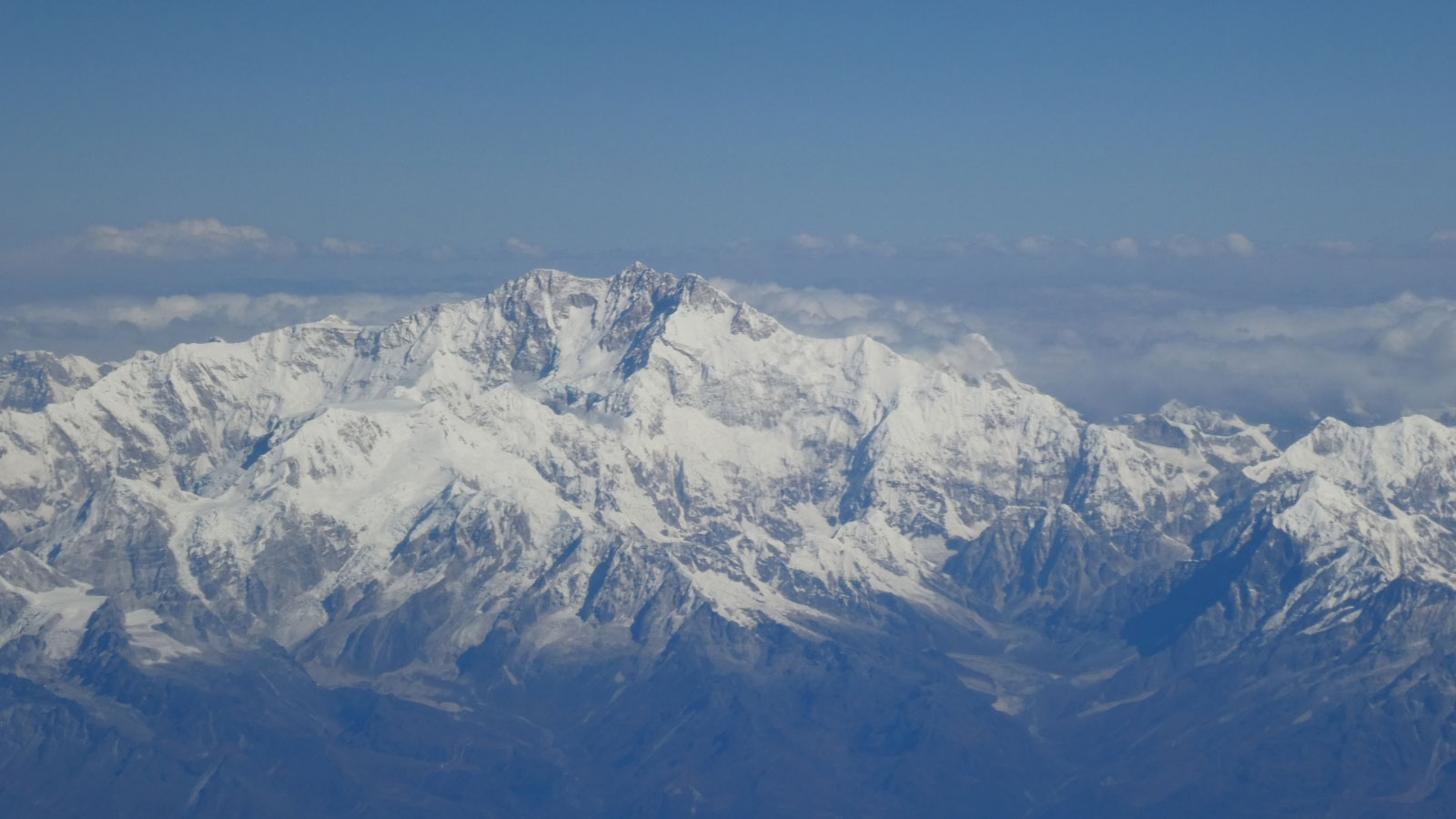
The flight to Paro on a clear day is one of the most spectacular of all mountain flights. One can see Mt. Everest, Kanchenjunga, Makalu and other peaks in Bhutan such as Chomolhari, Jichu Drake and Tsering Ghang. The Kandoo team will meet you at the airport and transfer you to Thimphu, the capital city of Bhutan. The journey takes around 2 hours and leads through the Paro valley to the confluence of the Paro and Thimphu rivers at Chuzom. If time permits we will visit the King’s Memorial Chorten, continuously circumambulated by people, murmuring mantras and spinning their prayer wheels. Construction of this landmark was the idea of Bhutan’s third king, His Majesty Jigme Dorji Wangchuk (“the father of modern Bhutan”). Completed in 1974 after his untimely death, it serves both as a memorial to the late King and as a monument to peace.
Later you will attend a pre-trek briefing with your Lead Guide to prepare you for the challenge ahead. We will spend the night at a hotel in Thimphu.
Accommodation: Hotel
Meals included: Lunch / Dinner
Day 02: Thimphu Sightseeing – Punakha
Today we will take a tour of Bhutan’s capital city. We begin with a visit to the National Library, which holds a vast collection of ancient Buddhist texts and manuscripts, some dating back several hundred years, as well as modern academic books on Himalayan culture and religion. Next we will visit the nearby Institute for Zorig Chusum, commonly known as the Arts & Crafts School. The Institute offers a six-year course on the 13 traditional arts and crafts of Bhutan and during the visit, we can see students learning the various skills taught at the school. We then take a drive towards city centre to visit the Textile museum and Folk Heritage Museum. These museums, both of which opened in 2001, provide fascinating insights into Bhutanese material culture and way of life. (Please note both the National Library and the Institute for Zorig Chusum are closed at weekends and government holidays, and the Textile Museum is closed on Sundays and government holidays).
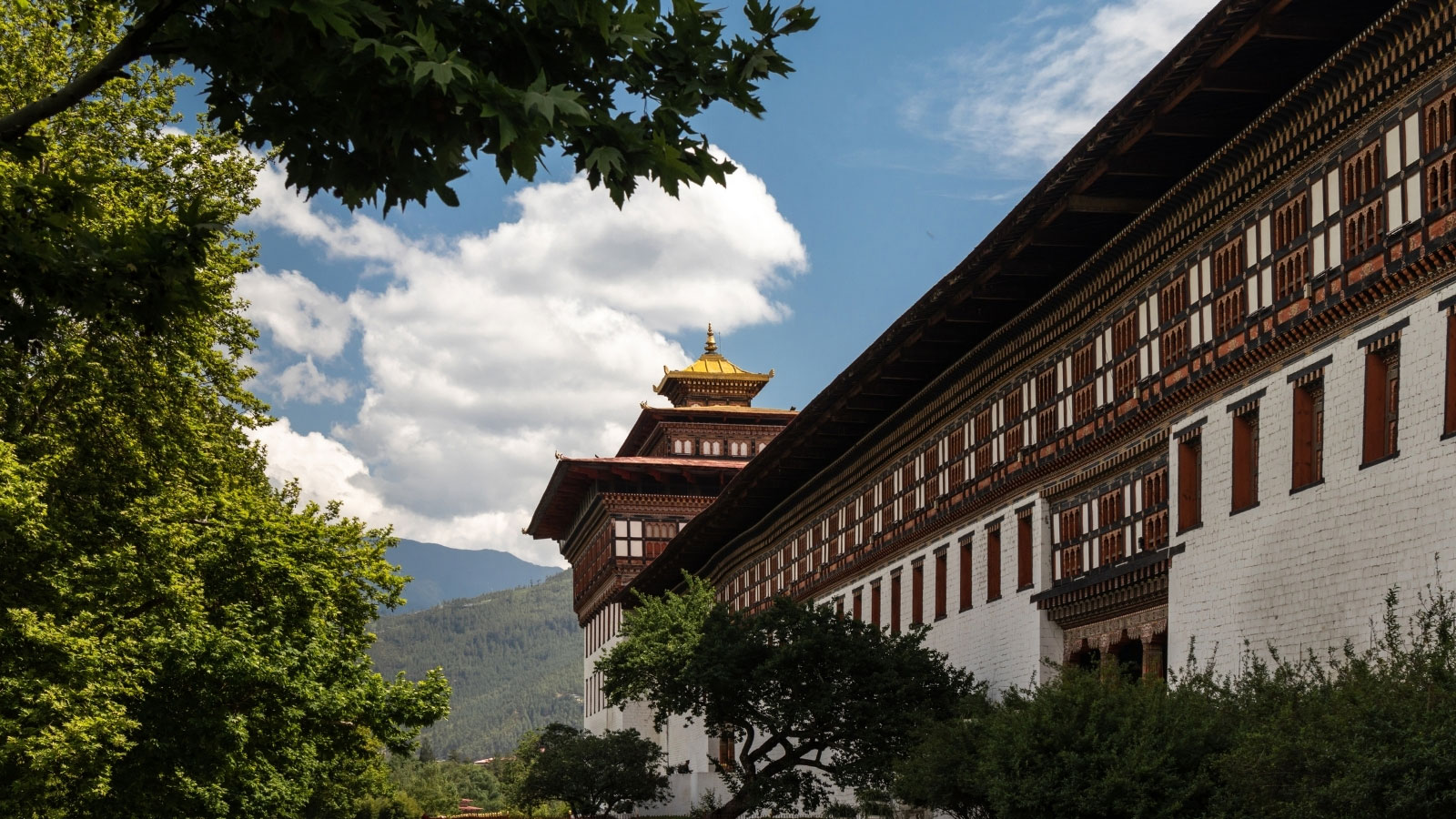
We finish our tour with a sightseeing visit to Trashichhoe Dzong, “the fortress of the glorious religion”. This impressive monastery and fortress has housed the seat of Bhutan’s government since 1968, the throne room of His Majesty the King and various government offices. It is also the summer residence of the Chief Abbot and central monk body.
Later in the afternoon we will drive to Punakha via the Dochu La Pass (3,088m), through magnificent forests of rhododendron and magnolia. From the pass, there is a far-reaching view of the eastern Himalayan peaks and the Lunana trekking route.
Ascent: 738 m
Descent: 1488 m
Max. altitude: 3088 m
Accommodation: Hotel
Meals included: Breakfast / Lunch / Dinner
Day 03: Punakha Sightseeing – Gasa
This morning we will take a guided tour of Punakha Dzong, the second largest dzong in Bhutan. Built strategically at the junction of the Pho Chhu and Mo Chhu rivers in 1637 by Shabdrung Ngawang Namgyal, it serves as the religious and administrative centre of the region. After lunch, we will drive up the valley, following the Mo Chhu river to the village of Gasa Tshachu, famous for the curative powers of its hot springs. We will camp overnight here.
Ascent: 970 m
Max. altitude: 2570 m
Accommodation: Camping
Meals included: Breakfast / Lunch / Dinner
Day 04: Gasa – Chamsa
This morning we start our trek climbing up through thick sub-tropical forest to the village of Chamsa.
Hiking time: 4 – 5 hours
Ascent: 330 m
Max. altitude: 2900 m
Accommodation: Camping
Meals included: Breakfast / Lunch / Dinner
Day 05: Chamsa – Laya
The trail descends to the bank of the Mo Chhu river. After crossing the river, we have lunch by the bridge. From here it is a gradual climb up to Laya, passing by an army camp en route, to our overnight campsite. The Laya people are very friendly and will happily pose for photographs with you in their native dress.
Hiking time: 7 – 8 hours
Ascent: 940 m
Max. altitude: 3840 m
Accommodation: Camping
Meals included: Breakfast / Lunch / Dinner
Day 06: Laya – Rhodophu
From Laya, we descend, passing by the army camp once again and continuing to follow the river. After lunch, we continue climbing upwards through rhododendrons until we reach a hanging valley where there are often yaks grazing. We will camp here by the river.
Hiking time: 8 – 9 hours
Ascent: 510 m
Max. altitude: 4350 m
Accommodation: Camping
Meals included: Breakfast / Lunch / Dinner
Day 07: Acclimatization Day at Rhodophu
Today we will take a hike up to a higher altitude to help our acclimatisation for our big push tomorrow over the mountain passes. We will also take time to rest and prepare ourselves for our ascent above 5000 metres over the next couple of days.
Accommodation: Camping
Meals included: Breakfast / Lunch / Dinner
Day 08: Rhodophu – Narethang
Today we climb up to Tsimola La Pass (4,700m). After crossing the pass and summit we will have superb views of Lunana and the peaks of Mt. Chomolhari and Mt. Jichu Drake. We continue to ascend up to 4900 metres to Narethang where we will camp for the night. Tomorrow morning we will start our climb up to Ganglakarchung La Pass; at 5100 metres this will be the highest point of our trek so far.
Hiking time: 6 – 7 hours
Ascent: 550 m
Max. altitude: 4900 m
Accommodation: Camping
Meals included: Breakfast / Lunch / Dinner
Day 09: Narathang – Tarina via Ganglakarchung La Pass
We will walk over fairly level ground before starting the climb up to Ganglakarchung La Pass (5,100m). The view from the trail is breath-taking, a panorama of mountain peaks rising over 7000 metres, including Masagang and Tsendegang. This is arguably one of Bhutan’s most stunning mountain viewpoints so make sure you have your camera at the ready. After crossing the pass we start our long descent down to the Tarina valley and much welcome lower altitudes.
Hiking time: 6 – 7 hours
Ascent: 200 m
Descent: 1120 m
Max. altitude: 5100 m
Accommodation: Camping
Meals included: Breakfast / Lunch / Dinner
Day 10: Tarina – Woche
The path descends through coniferous forests, following the upper reaches of the Pho Chhu river. The trail then climbs over a ridge and drops to Woche at 3,800m, the first village of Lunana.
- Hiking time: 6 – 7 hours
- Descent: 180 m
- Max. altitude: 3980 m
- Accommodation: Camping
- Meals included: Breakfast / Lunch / Dinner
Day 11: Woche – Lhedi via Keche La Pass
The path descends through coniferous forests, following the upper reaches of the Pho Chhu river. The trail then climbs over a ridge and drops to Woche at 3,800m, the first village of Lunana.
Hiking time: 6 – 7 hours
Descent: 180 m
Max. altitude: 3980 m
Accommodation: Camping
Meals included: Breakfast / Lunch / Dinner
Day 12: Lhedi – Thanza
The route continues to follow the river, rising gradually to Choejong village (the largest village in Lunana) where we stop for lunch. After lunch, we visit the village temple before continuing on our trek until we meet the river again, which we cross by a suspension bridge. Soon we reach our campsite at Thanza, the second largest village in Lunana.
Hiking time: 7 – 8 hours
Ascent: 350 m
Max. altitude: 4000 m
Accommodation: Camping
Meals included: Breakfast / Lunch / Dinner
Day 13: Acclimatization Day at Thanza
A welcome day of leisure, for relaxing, reading, catching up with the washing, or just strolling around. If you are feeling really energetic, you can climb up to the ridge for yet another splendid view of the mountains.
Accommodation: Camping
Meals included: Breakfast / Lunch / Dinner
Day 14: Thanza – Tshorim
Today our trek starts with a climb up to the ridge, from where there is a great view of Table Mountain and Thanza valley below. We cross the ridge, and enter a small valley with a stream running through it. We continue to follow the stream up the valley, enjoying the view of snow-capped mountains, and have lunch near a crossing point. We then climb up out of the valley, crossing some small ridges to reach our campsite at Tshorim.
Hiking time: 8 – 9 hours
Ascent: 1125 m
Max. altitude: 5125 m
Accommodation: Camping
Meals included: Breakfast / Lunch / Dinner
Day 15: Tshorim – Gangkar Puensum Base
Today our trek starts with a climb up to the ridge, from where there is a great view of Table Mountain and Thanza valley below. We cross the ridge, and enter a small valley with a stream running through it. We continue to follow the stream up the valley, enjoying the view of snow-capped mountains, and have lunch near a crossing point. We then climb up out of the valley, crossing some small ridges to reach our campsite at Tshorim.
Hiking time: 8 – 9 hours
Ascent: 1125 m
Max. altitude: 5125 m
Accommodation: Camping
Meals included: Breakfast / Lunch / Dinner
Day 16: Gangkar Puensum Base – Geshe Woma
The trek continues to follow the Sha Chhu river, descending gradually to Geshe Woma where we camp for the night.
Hiking time: 6 – 7 hours
Descent: 770 m
Max. altitude: 4970 m
Accommodation: Camping
Meals included: Breakfast / Lunch / Dinner
Day 17: Geshe Woma – Warathang via Saka La Pass
The path continues along the course of the Sha Chhu river for two and half hours until we begin the stiff climb to Saka La. We stop for lunch near a yak herder’s camp, then climb up to Saka La Pass (4,800m). We can take in the stunning views on the descent to the lakes before another short ascent takes us across the Warathang La Pass (4,590m). The scenery once again is stunning. We finally descend once more to our campsite at Warathang.
Hiking time: 8 – 9 hours
Ascent: 600 m
Descent: 800 m
Max. altitude: 4800 m
Accommodation: Camping
Meals included: Breakfast / Lunch / Dinner
Day 18: Warathang – Dur Tshachu via Uli La Pass
A short half-hour climb takes us up to Uli La Pass (4,400m). After crossing the pass we descend to the riverside through dense rhododendron, juniper and conifer forests. We then cross a bridge and after a short climb reach the hot springs at Dur Tshachu, where legend has it that Guru Padsambhava bathed in the 8th century.
Hiking time: 5 – 6 hours
Ascent: 400 m
Descent: 450 m
Max. altitude: 4400 m
Accommodation: Camping
Meals included: Breakfast / Lunch / Dinner
Day 19: Dur Tshachu – Tshochenchen via Jule La Pass
From the spring, it is a long and steady climb blessed with great views of the mountains of Lunana. First we cross the Gokthong La Pass (4,650m) before descending to several beautiful deep blue lakes at 4220m, with yaks grazing on the surrounding pastures, and yak herders’ camp. We then ascend the second pass, Jule La Pass (4,700m), before our final descent to our camp at Tshochenchen.
Hiking time: 8 – 9 hours
Ascent: 750 m
Descent: 850 m
Max. altitude: 4700 m
Accommodation: Camping
Meals included: Breakfast / Lunch / Dinner
Day 20: Tshochenchen – Gorsum
We trek downhill from Tshochenchen, following the Yoleng Chhu river through thick forests of cypress, spruce, juniper, maple and hemlock. A short climb brings us to our campsite at Gorsum.
Hiking time: 9 – 10 hours
Descent: 660 m
Max. altitude: 3850 m
Accommodation: Camping
Meals included: Breakfast / Lunch / Dinner
Day 21: Gorsum – Dur – Bumthang
This is the last day of the trek where we change from yaks to pack ponies. We have to set off early in order to reach Bumthang before dark. The path follows the Chamkhar Chhu river, descending gradually with few climbs. The trek ends when we reach the village of Dur. From here, transport will pick us up and drive us to our lodge in Bumthang.
Hiking time: 5 – 6 hours
Descent: 540 m
Max. altitude: 3190 m
Accommodation: Lodge
Meals included: Breakfast / Lunch / Dinner
Day 22: Bumthang Sightseeing
The Bumthang valley is the cultural heartland of the nation. The hills around the valley are filled with monasteries dedicated to Guru Padsambhava. The valley is also the ancestral home of the great Buddhist teacher, Pema Linga, from whose descendants the present monarchy traces its origin. We spend time exploring the valley, visiting Jakar Dzong, Kurje Lhakhang, Jambey Lhakhang and Tamshing Lhakhang, before returning to our lodge for the night.
Accomodation: Lodge
Meals included: Breakfast / Lunch / Dinner
Day 23: Fly Bumthang – Paro
Today we fly from Bumthang to Paro. We will have free time today to rest and relax at our hotel.
Descent: 450 m
Max. altitude: 2650 m
Accomodation: Hotel
Meals included: Breakfast / Lunch / Dinner
Day 24: Excursion to Taktshang Lhakhang
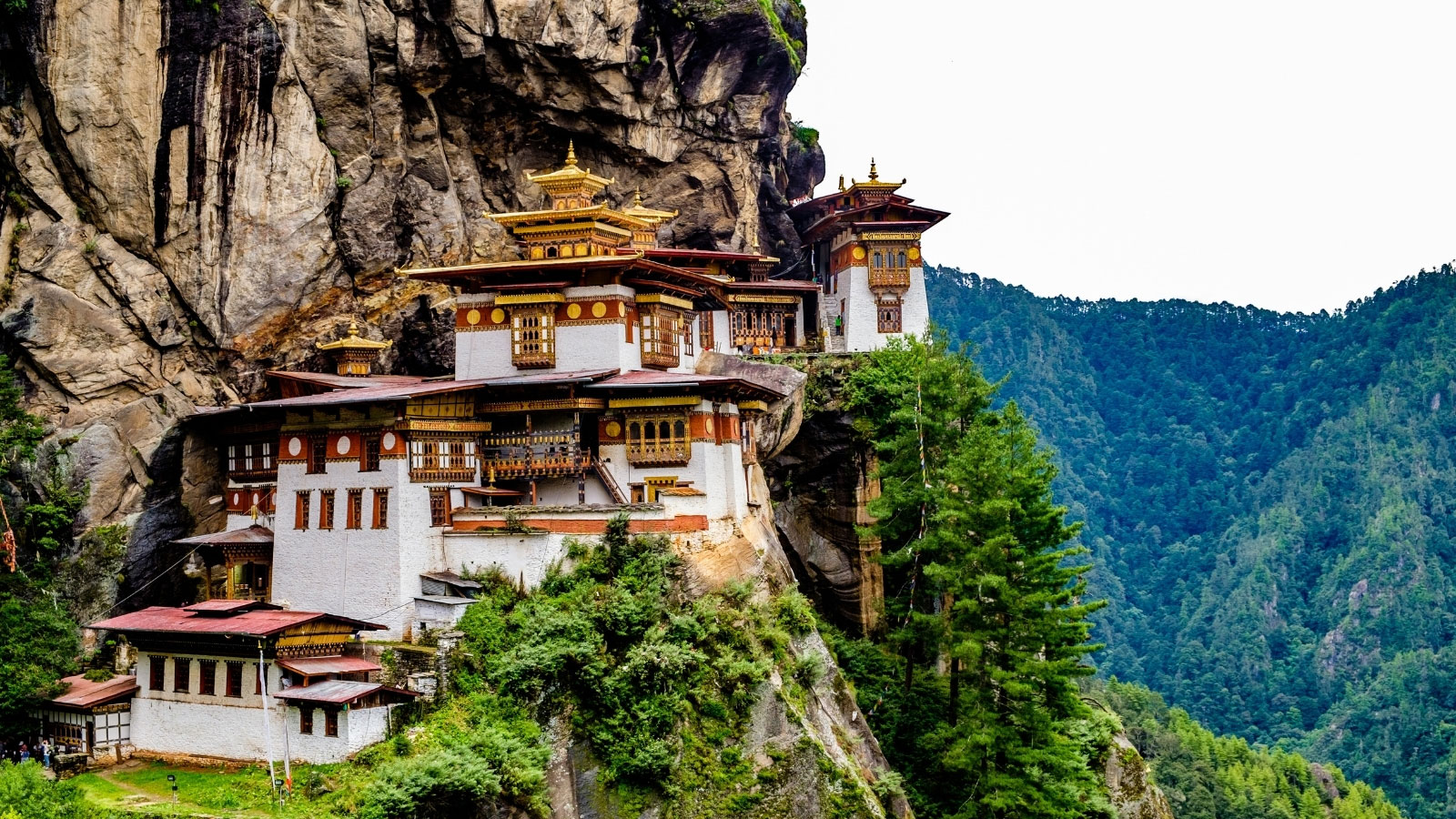
In the morning we will take an excursion to Taktshang Lhakhang, commonly known as ‘The Tiger’s Nest Monastery’. Undoubtedly one of the most famous of Bhutan’s monasteries, the Taktshang monastery is one of the most breath-taking temples in the world. This Buddhist place of worship is perched on a cliff-top at around 3,100m above sea level. The main temple complex was built in 1692, and is considered to be one of the holiest for the Bhutanese people. Legend has it that Guru Rinpoche, an 8th-century Indian Buddhist master, arrived here on the back of a tigress and meditated at this monastery, thus the name ‘Tiger’s Nest’. The site has been recognized as a sacred place and is now visited by all Bhutanese at least once in their lifetime. On 19 April, 1998, a fire severely damaged the main structure of building but now this Bhutanese jewel has been restored to its original splendour. After lunch we will visit the 7th century Kyichu Lhakhang, one of the 108 temples built in the Himalayas by Tibetan King, Songtsen Gampo. The building of this temple marks the introduction of Buddhism to Bhutan. We will then drive to Drukgyel Dzong, a ruined fortress where Bhutanese warriors fought Tibetan invaders centuries ago. In the early 1950s, Drukgyel Dzong was almost completely destroyed by fire. It is now listed in Bhutan’s Tentative List for UNESCO inclusion. In 2016, the Prime Minister Lyonchen Tshering Tobgay, announced that the Dzong will be rebuilt and reinstated to its former glory. The snowy dome of sacred Chomolhari (7326m), ‘the Bride of Kangchenjunga’, can be seen in all her glory from the approach road to the Dzong. After our tours we will return to our hotel in Paro.
Accomodation: Hotel
Meals included: Breakfast / Lunch / Dinner
Day 25: Departure
We will collect you from your hotel and transfer you to Paro Airport for your flight.
Meals included: Breakfast
Includes
- 3-star hotel accommodation
- All meals (B/L/D)
- Private transportation throughout
- Licensed English-speaking guide
- Experienced driver
- Bhutan visa included
- Government fees, taxes & SDF
- All entrance fees & permits
- Complimentary bottled water
- International airfare to/from Bhutan
- Personal expenses
- Beverages
- Travel insurance
- Tips & gratuities