Traditions of Bhutan
Quick Info
Duration
6 Days 5 Nights
Difficulty
Moderate
Alleviation
2,000 – 3,000 m
Tour Type
Cultural
Overview
The Buddhist Kingdom of Bhutan lies along the lofty ridges of the eastern Himalayas, bordered by China (Tibet) to the north and northwest, and by the Indian states of Arunachal Pradesh, Assam, West Bengal and Sikkim on the east, south and west respectively. With an area of 46,500 square km, Bhutan is comparable to Switzerland both in its size and topography. The mighty Himalaya have protected Bhutan from the rest of the world and left it blissfully untouched through the centuries. The Bhutanese people have protected this sacred heritage and unique identity for centuries by choosing to remain shrouded in a jealously guarded isolation. Experience the remote, gentle nature of it’s people on a once in a lifetime trip.
Tour Highlights
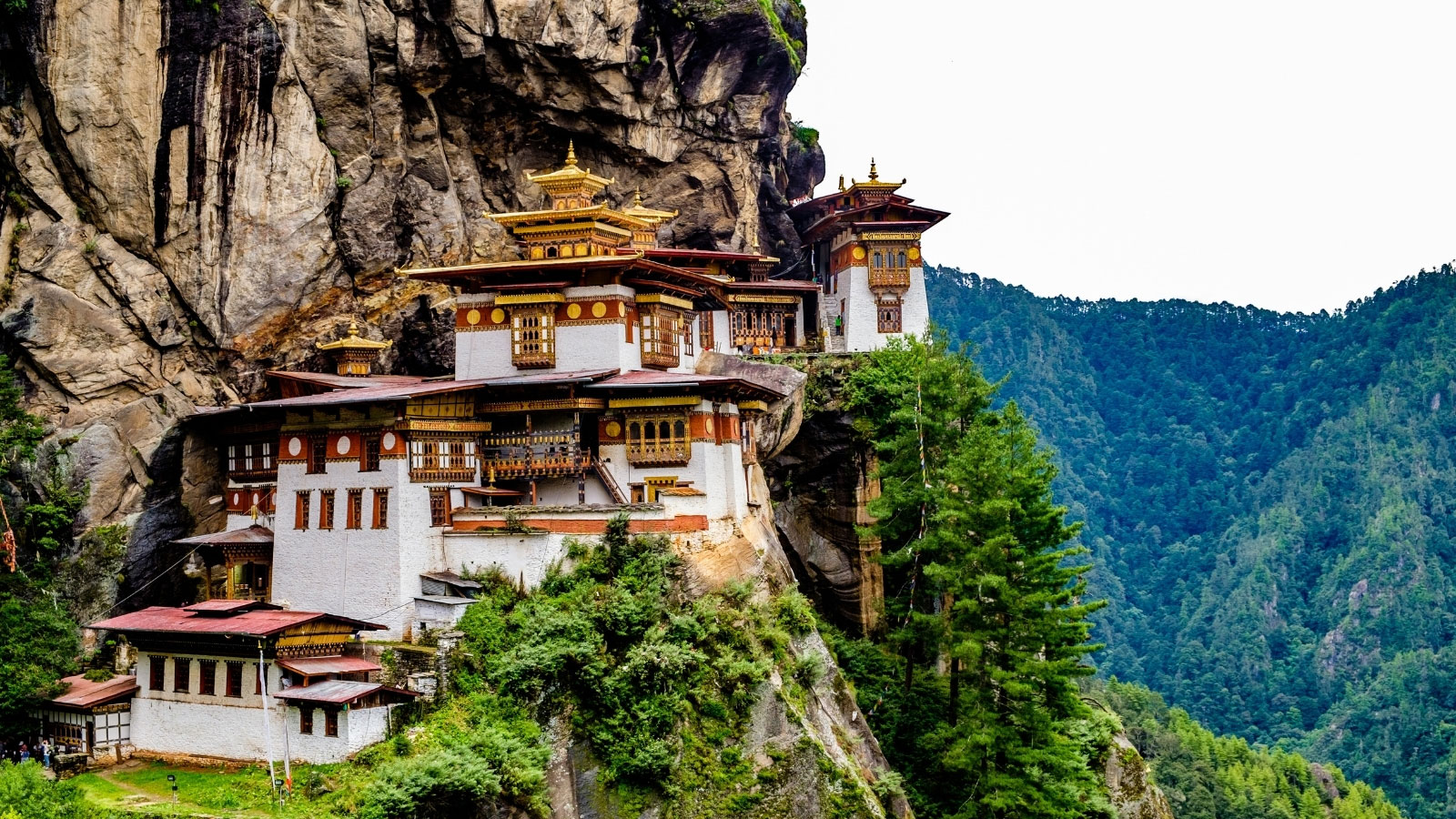
- Visit the breath-taking Tiger’s Nest Monastery
- Trek through unspoilt wilderness
- Be immersed in the culture of this ancient Himalayan kingdom
- Trip fully carbon offset as standard
Itinerary
Day 01: Arrival in Paro
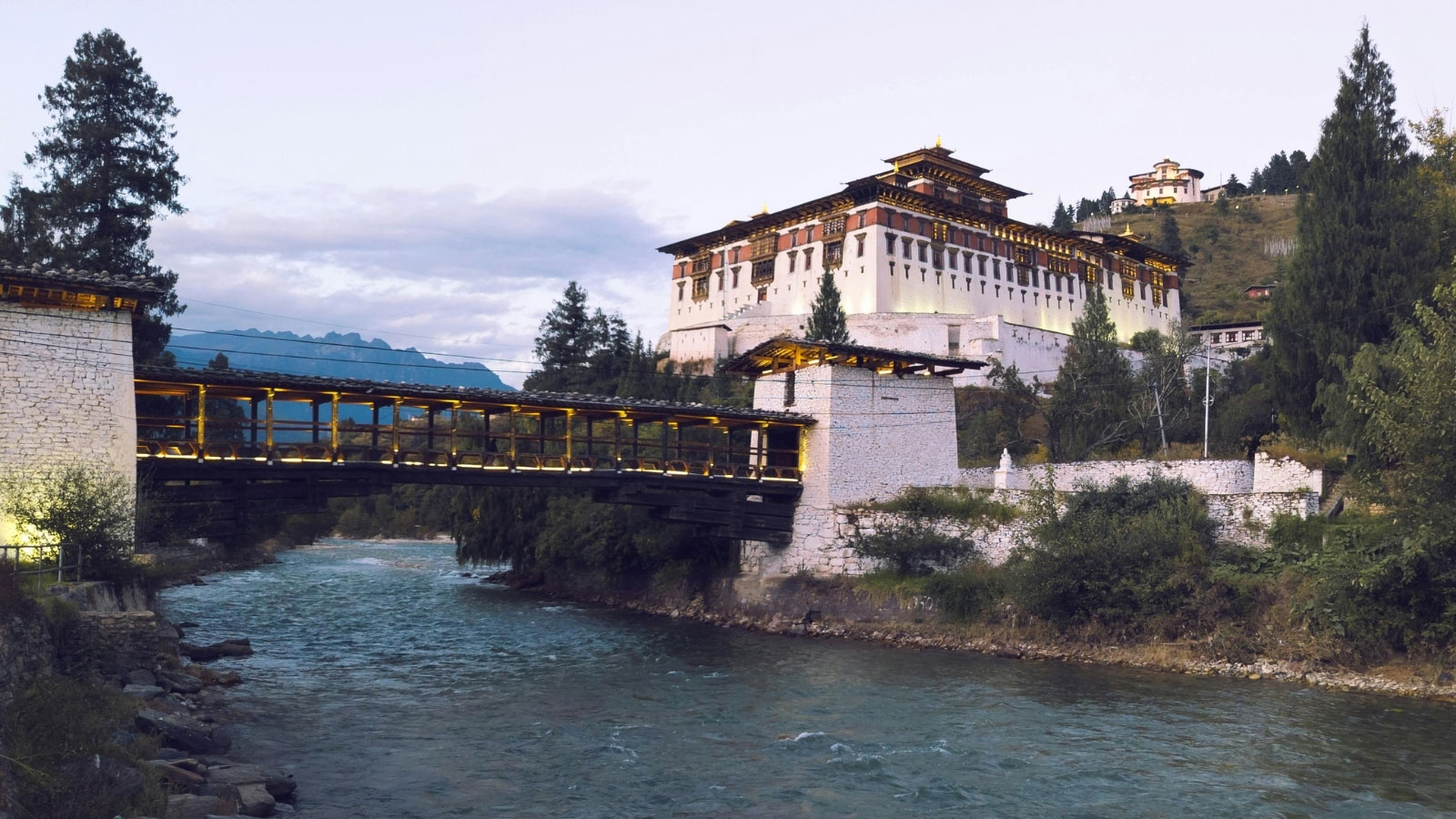
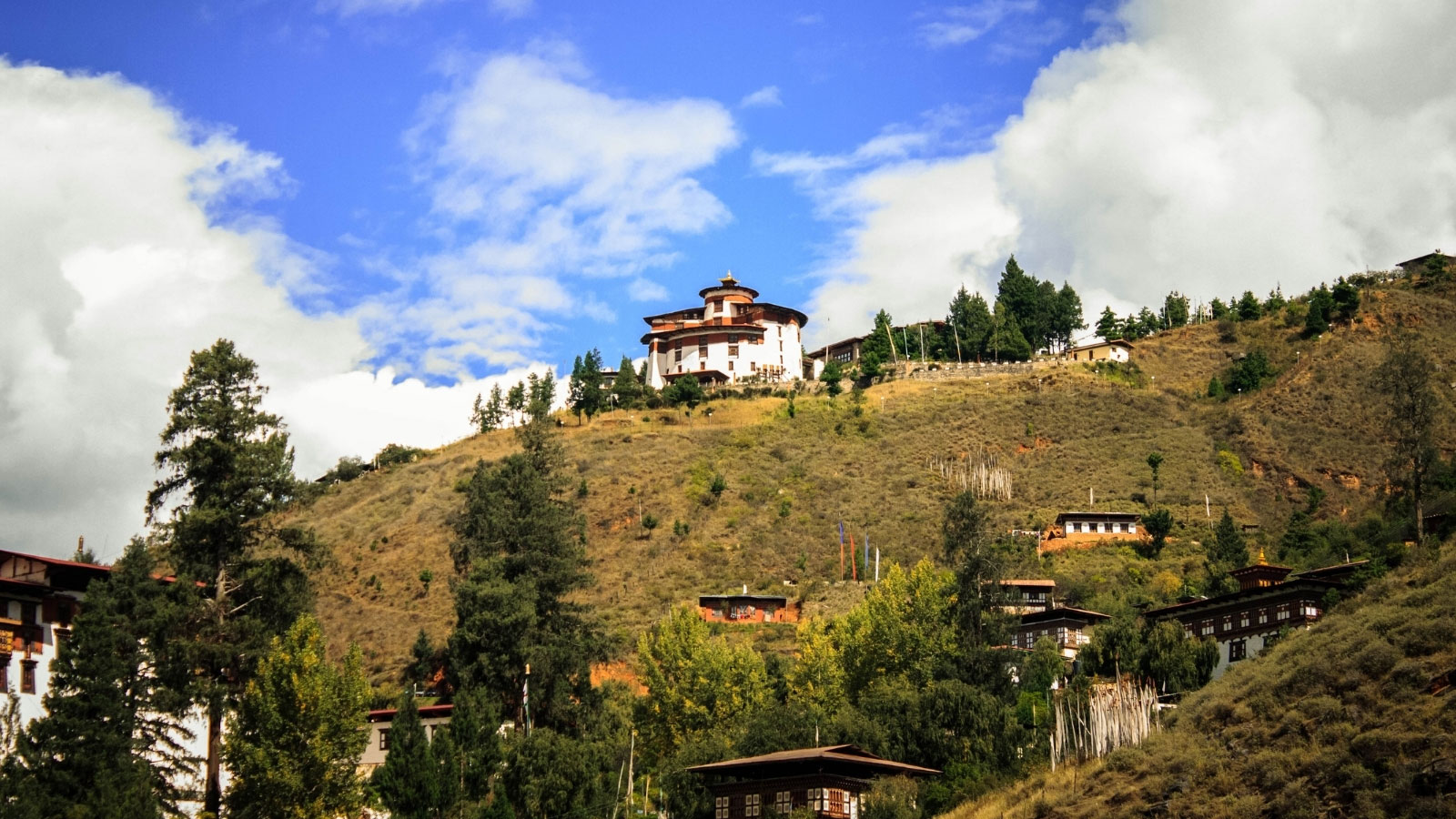
The Kandoo team will be waiting for you at Paro airport to transfer you to your hotel. If you wish, there is the option to join a tour of the city in the afternoon. Ta Dzong was inaugurated as Bhutan’s National Museum in 1968. Built as a watchtower to defend Rinpung Dzong during the inter-valley wars of the 17th century, it is now home to a fascinating collection of art, relics, religious thangkha paintings and Bhutan’s exquisite postage stamps. Afterwards, we will walk down a hillside trail to visit Rinpung Dzong, ‘The Fortress of the Heap of Jewels’. Built in 1646 by Shabdrung Ngawang Namgyal, the first spiritual and temporal ruler of Bhutan, the Dzong now houses the offices of the district administration and themonastic body of Paro. The approach to the Dzong is through a covered wooden bridge typical of Bhutan called Nemi Zam, which offers a great view of the architectural wonder of the Dzong.
Transport: Private transfer
Accomodation: Hotel
Meals included: Breakfast / Lunch / Dinner
Day 02: Excursion to Taktshang Lhakhang
In the morning we will take an excursion to Taktshang Lhakhang, commonly known as ‘The Tiger’s Nest Monastery’. Undoubtedly one of the most famous of Bhutan’s monasteries, the Taktshang monastery is one of the most breath-taking temples in the world. This Buddhist place of worship is perched on a cliff-top at around 3,100m (10,000ft) above sea level. The main temple complex was built in 1692, and is considered to be one of the holiest for the Bhutanese people. Legend has it that Guru Rinpoche, an 8th-century Indian Buddhist master, arrived here on the back of a tigress and meditated at this monastery, thus the name ‘Tiger’s Nest’. The site has been recognized as a sacred place and is now visited by all Bhutanese at least once in their lifetime. On 19 April, 1998, a fire severely damaged the main structure of building but now this Bhutanese jewel has been restored to its original splendour.
We will stop for lunch at a café halfway down the trail, before continuing back down to our vehicle. If time permits we may visit the 7th century Kyichu Lhakhang, one of the 108 temples built in the Himalayas by Tibetan King, Songtsen Gampo, on our return journey to Paro. After our tours we will return to our hotel in Paro.
Hiking time: 5 – 6 hours
Ascent: 860 m
Descent: 860 m
Max. altitude: 3110 m
Accommodation: Hotel
Meals included: Breakfast / Lunch / Dinner
Day 03: Paro to Thimphu
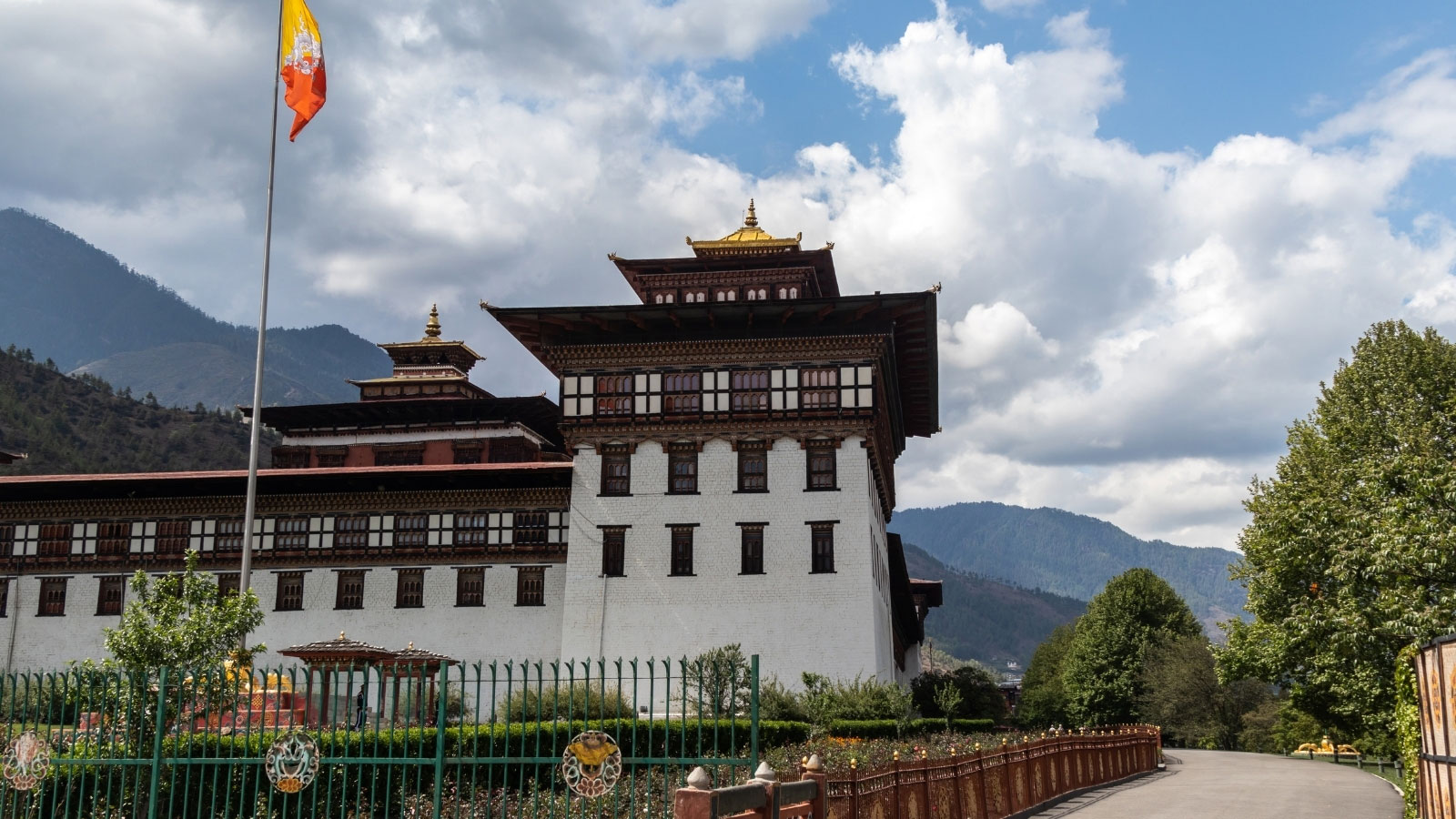
On arrival in Thimphu there will be time to enjoy a city tour. The King’s Memorial Chorten was planned by Bhutan’s third king, His Majesty Jigme Dorji Wangchuk, but was only completed after his death so now serves as his memorial. An important religious site and the focus of daily worship, people will circumambulate the chorten throughout the day, reciting prayers and whirling the red prayer wheels. You may also visit the Trashichhoe Dzong – The Fortress of the Glorious Religion – the seat of government and religion which is home to the monarch’s throne room. Originally built in 1641, the Dzong was rebuilt in the 1960s using traditional Bhutanese methods. You will stay in a hotel in Thimphu tonight.
AccomModation: Hotel
Meals included: Breakfast / Lunch / Dinner
Day 04: Thimphu to Punakha
This morning you will continue with your tour of Thimphu. The National Library houses a collection of ancient Buddhist manuscripts and texts dating back over hundreds of years, as well as modern academic books about Himalayan religion and culture. The Institute for Zorig Chusum is an Arts and Crafts School where students learn the 13 traditional arts and crafts of Bhutan. The Textile Museum is he place to learn about Bhutan’s history of weaving, from the techniques used by local people to the wedding clothes worn by the king. Simply Bhutan is a living museum that introduces many aspects of Bhutanese traditional life. The project aims to preserve and promote culture, and provides job opportunities and training to young people. (Please be aware that not all sites may be open on the day you are due to visit Thimphu. The National Library and the Institute for Zorig Chusum are both closed on weekends and government holidays. The Textile Museum is closed on Sundays and government holidays.)
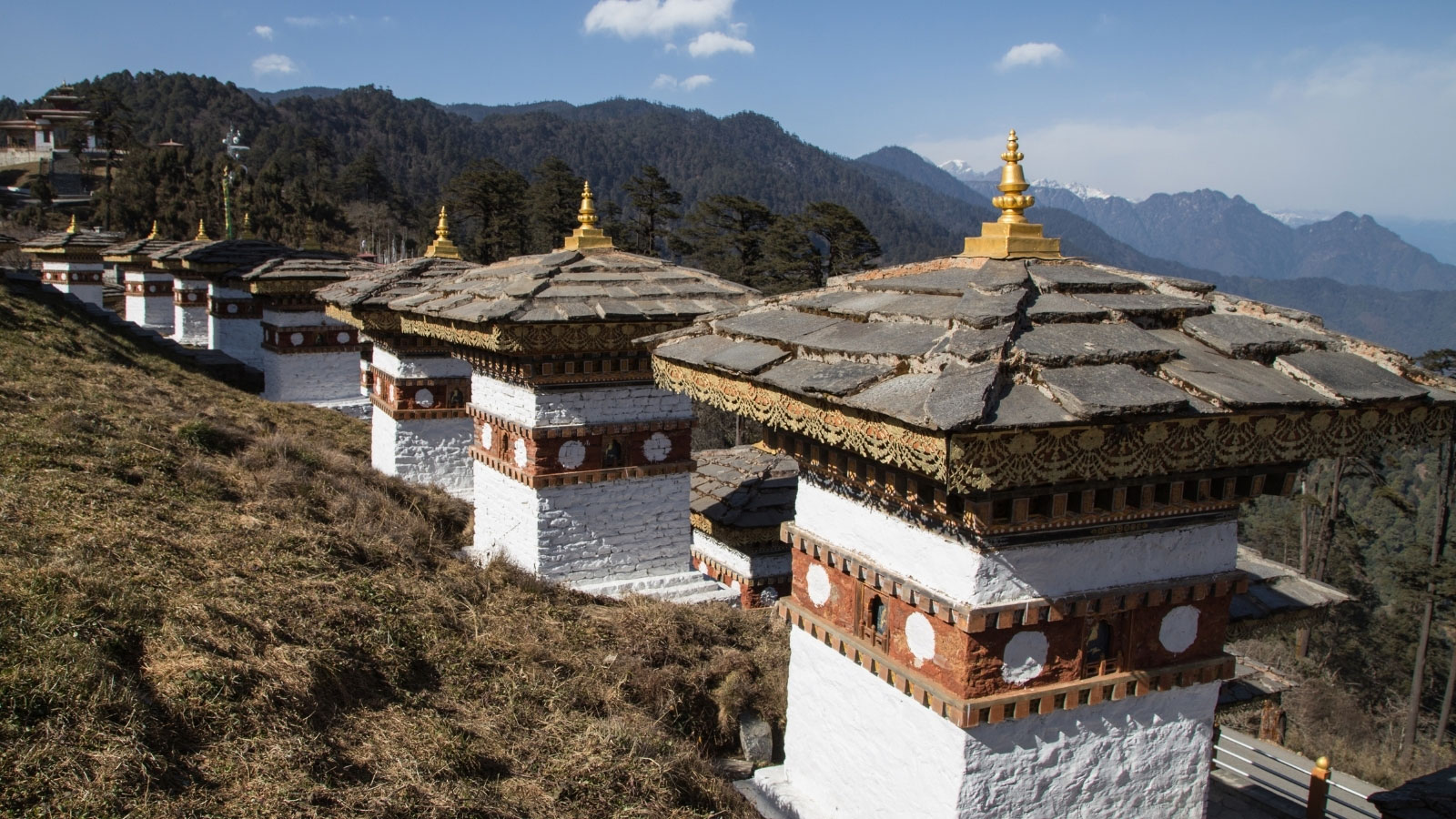
After lunch, you will be driven from Thimphu to Punakha, which takes around 3 hours. The road takes you up to the Dochu-La Pass on a series of switchbacks. The highest point on the road, 3088m, is marked by a chorten, mani wall and many prayer flags. The view from here is magnificent and the panorama includes the towering peaks of Masagang (7,158m), Tsendagang (6,960m), Terigang (7,060m), Jejegangphugang (7,158m), Kangphugang (7,170m), Zongphugang (7,060m), and Gangkar Puensum (7,570m). The road from the pass drops down into the Punakha valley and on to the town of Punakha where you will stay in a hotel.
Accommodation: Hotel
Meals included: Breakfast / Lunch / Dinner
Day 05: Punakha to Paro
Before you depart for Paro, you will visit the Punakha Dzong, which sits at the junction of the Mo Chhu and Pho Chhu rivers and is now the administrative and religious centre of the region. Built in 1637, the dzong has been damaged by four fires and an earthquake but has now been fully restored. As you drive back to Paro, which takes around 5 hours, you will take a break at the Chimi Lakhang. The temple is dedicated to Lama Drukpa Kuenley whose outrageous methods of teaching Buddhism earned him the name ‘The Divine Madman’. The lhakhang is also known as a temple of fertility, where women will pray for children.
Once you arrive in Paro, you will check into your hotel for your final night.
Accommodation: Hotel
Meals included: Breakfast / Lunch / Dinner
Day 06: Departure
We will collect you from your hotel and transfer you to Paro Airport for your flight.
Transport: Private transfer
Meals included: Breakfast
Includes
- 3-star hotel accommodation
- All meals (B/L/D)
- Private transportation throughout
- Licensed English-speaking guide
- Experienced driver
- Bhutan visa included
- Government fees, taxes & SDF
- All entrance fees & permits
- Complimentary bottled water
- International airfare to/from Bhutan
- Personal expenses
- Beverages
- Travel insurance
- Tips & gratuities